
Synthetic Matter
Measurement. Science is rooted in measurement: it is from measurements, as unified by theory, that understanding is born. Our comprehension of the universe is therefore bounded by our ability to observe and shaped by human creativity. Scientific progress is driven by the identification of new physical systems and measurement techniques, leading to new conceptual understanding. Our experiments use systems of ultracold neutral atoms, quantum gases, that make quantum physics manifest in the laboratory. Many properties of these systems can be understood in the intellectual context of many-body physics which describes systems from the commonplace such as crystals, fluids, and semiconductors, to the extreme such as superconductors, quantum Hall systems, and neutron stars. Many-body physics asks how the properties of individual components — atoms, electrons, nucleons — give rise to the observed macroscopic phenomena.
Ultracold atoms are a very different sort of system than conventional materials, composed of a few hundred to a few hundred million atoms, with densities ranging from 1012 cm-3 to 1015 cm-3, and at temperatures from below 1 nK to a couple uK. These atomic systems are unique in the simplicity of their underlying Hamiltonian along with a singular capacity for controlling and engineering their quantum degrees of freedom.
Our experiments — inspired by the on-going theory efforts of our collaborators world-wide — take place on several distinct apparatuses: RbK, focusing on artificial gauge fields for atomic Bose and Fermi gases; RbChip, creating spin-dependent forces without light; ErNa (with Gretchen Campbell and Stephen Eckel), studying sodium quantum fluids, including interfacial waves and hydrodynamic instabilities, with ultracold erbium in development; and the RbYb Array (led by Trey Porto and Steven Rolston and in collaboration with Nathan Schine) is a dual species optical tweezer array.
In collaboration with Dr. Justyna Zwolak in the Information Technology Laboratory at NIST, the KML apparatus uses ultracold potassium-39 to explore the application of machine learning to experimental control, data analysis and scientific exploration in quantum experiments.
Research opportunities. We are actively recruiting graduate students and postdoctoral researchers. Please contact Ian Spielman at spielman@umd.edu to discuss opportunities. For fellowship information and current application calls, see JQI opportunities and NIST-NRC associateships. Consult the program pages for current deadlines and eligibility requirements.
-
Dr. Yanda Geng shakes up some (quantum) fluids!
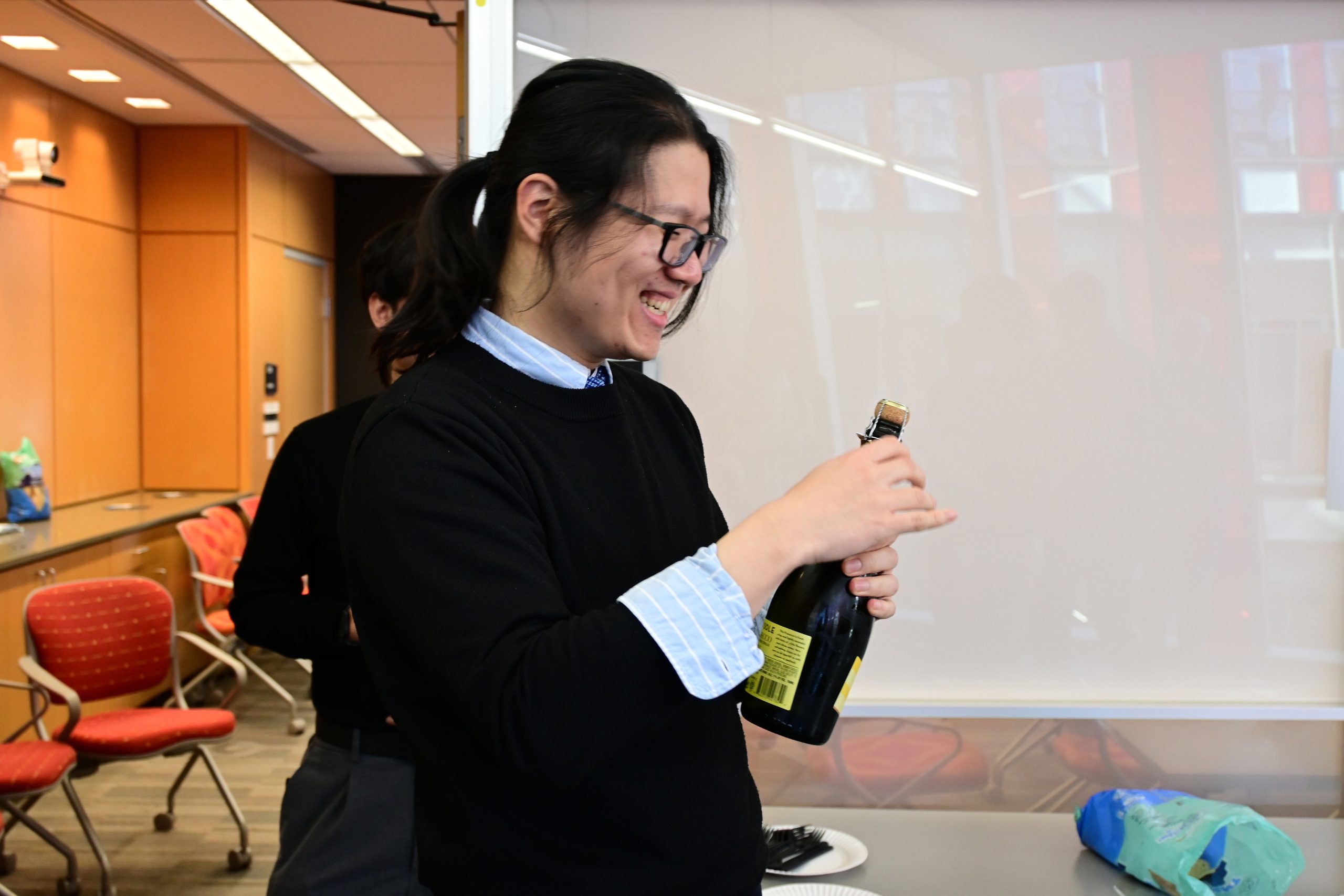
Congratulations Yanda!
-
In situ magnetic-field stabilization for quantum-gas experiments
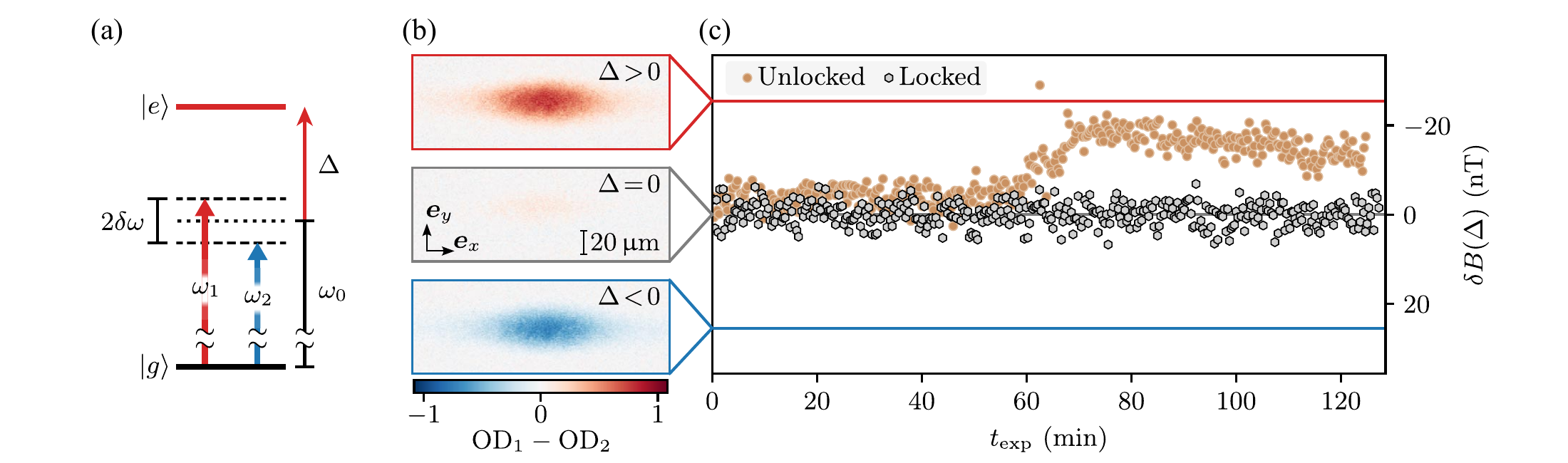
Ultracold quantum gases are a leading platform for quantum simulation with targets ranging from exotic materials to the expanding universe. That precision is also a vulnerability. For example, background magnetic fields shift the atoms’ internal energy levels, and even opening or closing a nearby door—or moving chairs in the laboratory—can disturb an experiment. Here, we…
-
U.S. Patent US12670563B2: Image recovery apparatus and removing aberrations in an acquired image from imperfect imaging optics
A process for removing aberrations in an acquired image from imperfect imaging optics includes: acquiring an acquired image of an object with an imperfect imaging system that includes an imperfect imaging optic, the acquired image including a plurality of pixels; producing a prior that includes an expectation of data for the object; determining a pixel-by-pixel…
-
Nondestructive characterization of laser-cooled atoms using machine learning
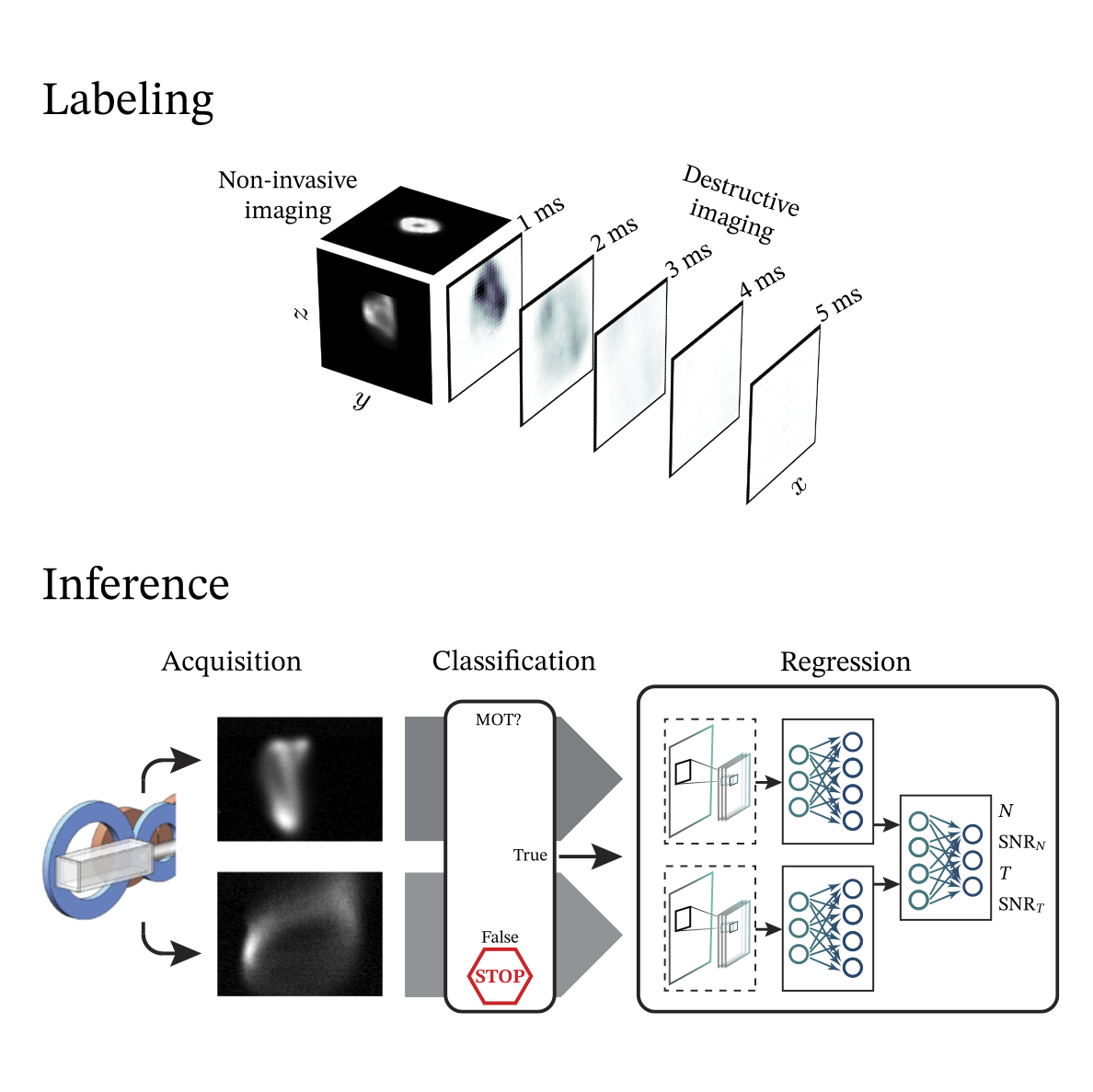
The magneto-optical trap (MOT) is a foundational laser-cooling and trapping tool used in modern atomic physics, with applications including atomic clocks and sensors as well as quantum simulators and computers. Before realizing these applications, researchers must have reliable laser cooling with stable number and temperature. The usual way to measure those quantities is to release…
-
Ian named AAAS fellow!
Ian named a Fellow of the American Association for the Advancement of Science (AAAS)! See the JQI article here (https://jqi.umd.edu/news/spielman-named-aaas-fellow) and the official announcement(https://www.aaas.org/page/2025-fellows)!